THE QUICK ANSWER
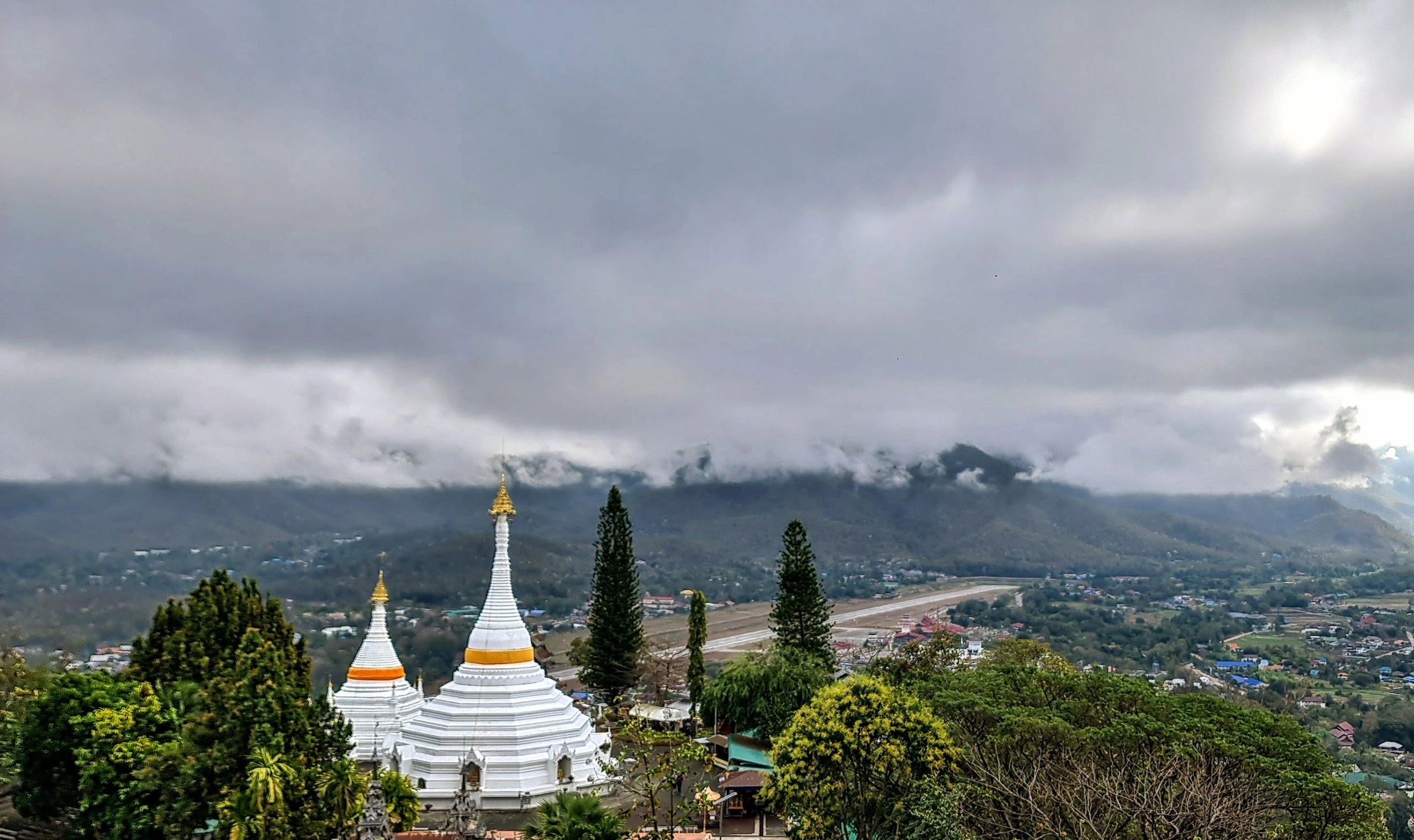
Choose the Samoeng Loop if you have one day and want to fall in love with riding Northern Thailand. It’s a 100 km half-to-full-day loop right out of Chiang Mai — mountain switchbacks, jungle, a 700-year-old tunnel temple, a hidden waterfall — and you’re back in town for dinner. No off-road. No long days. Beginner-friendly.
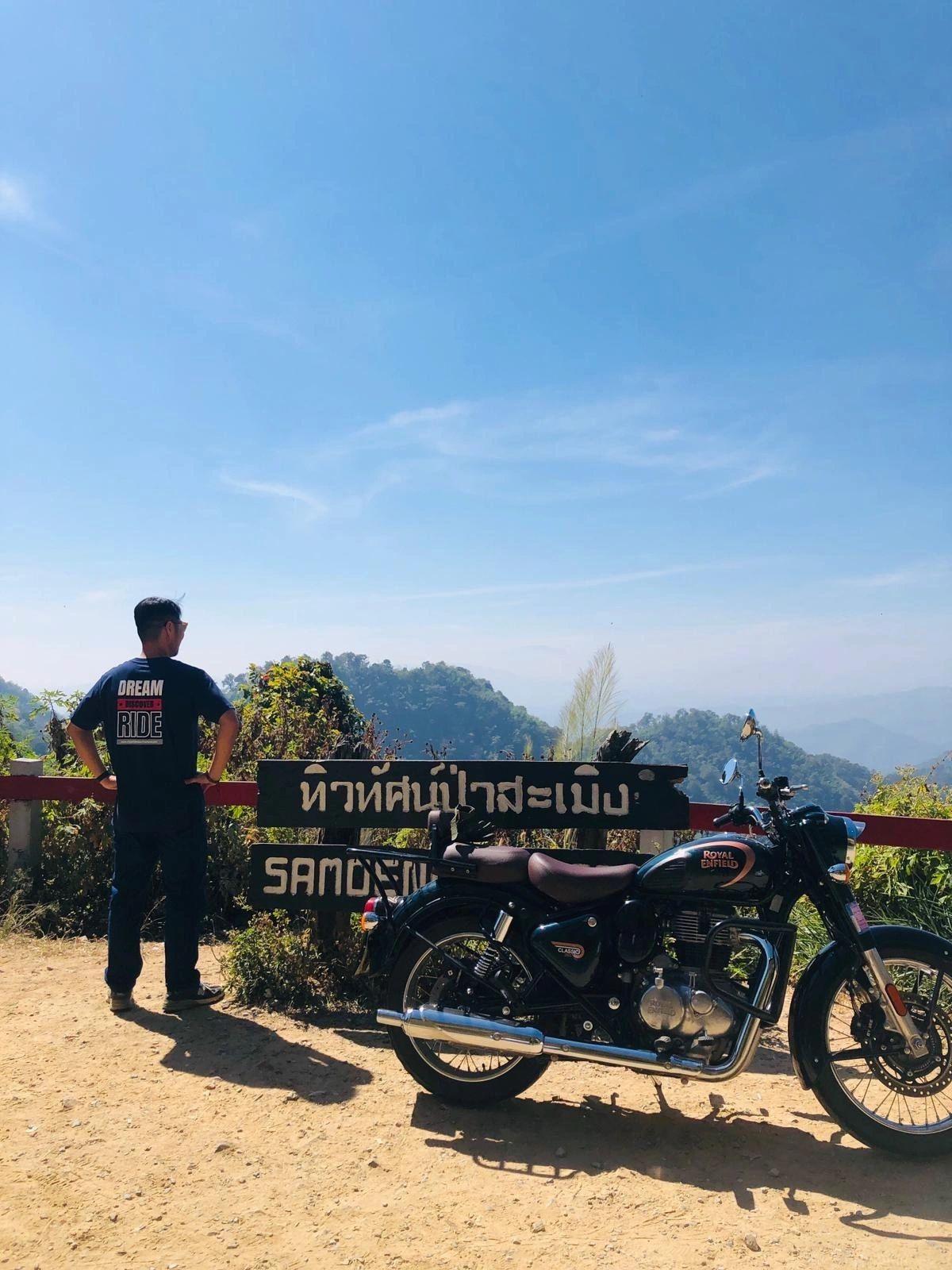
Choose the Mae Hong Son Loop if you have four days and you’ve been dreaming about this one. It’s 713 km the way we ride it: legendary mountain road, sleepy hill villages, cool-air valleys, and the kind of scenery that ruins you for normal road trips. The famous 1,864 curves are Route 108, the Mae Sariang side — we ride it clockwise so you meet those long sweepers first and the tighter 762 bends on Route 1095 through Pai at the end, when you’re ready for them.
SIDE-BY-SIDE
| Samoeng Loop | Mae Hong Son Loop | |
|---|---|---|
| Duration | 1 day (half or full) | 4 days, 3 nights, fully guided |
| Distance | ~100 km | 713 km (our route) |
| Difficulty | Easy — first-timers welcome | Intermediate — paved the whole way; if you can ride, you can do it |
| Bike type | Scooter or small bike (we provide both) | Honda CRF300L, NX500 or Royal Enfield — matched to you |
| Off-road | None — all paved | Optional dirt sections; main route is paved |
| Best for | A taste of the north, families, time-tight travelers | The trip-of-the-trip experience |
| Price (from) | $259 USD solo | See tour page |
| Group size | Around 5 riders | Around 5 riders |
| Includes | Guide, fuel, all meals, gear, entry fees | All of the above + lodging and three nights on the road |
CHOOSE THE SAMOENG LOOP IF…
You have one day. The Samoeng Loop is the only one of these two rides you can finish in an afternoon. We start in Chiang Mai, climb past the elephant sanctuaries on the road to Mae Rim, weave through the cool switchbacks of the Samoeng valley, and we’re back in town in time for a beer at sunset.
You’ve never ridden in Thailand before. The Samoeng Loop is the most popular one-day ride in Chiang Mai for a reason — it’s entirely paved, the climbs are gradual, the descents are predictable, and you ride at your own pace behind a guide who knows every corner. You can do it on a 125 cc scooter without breaking a sweat.
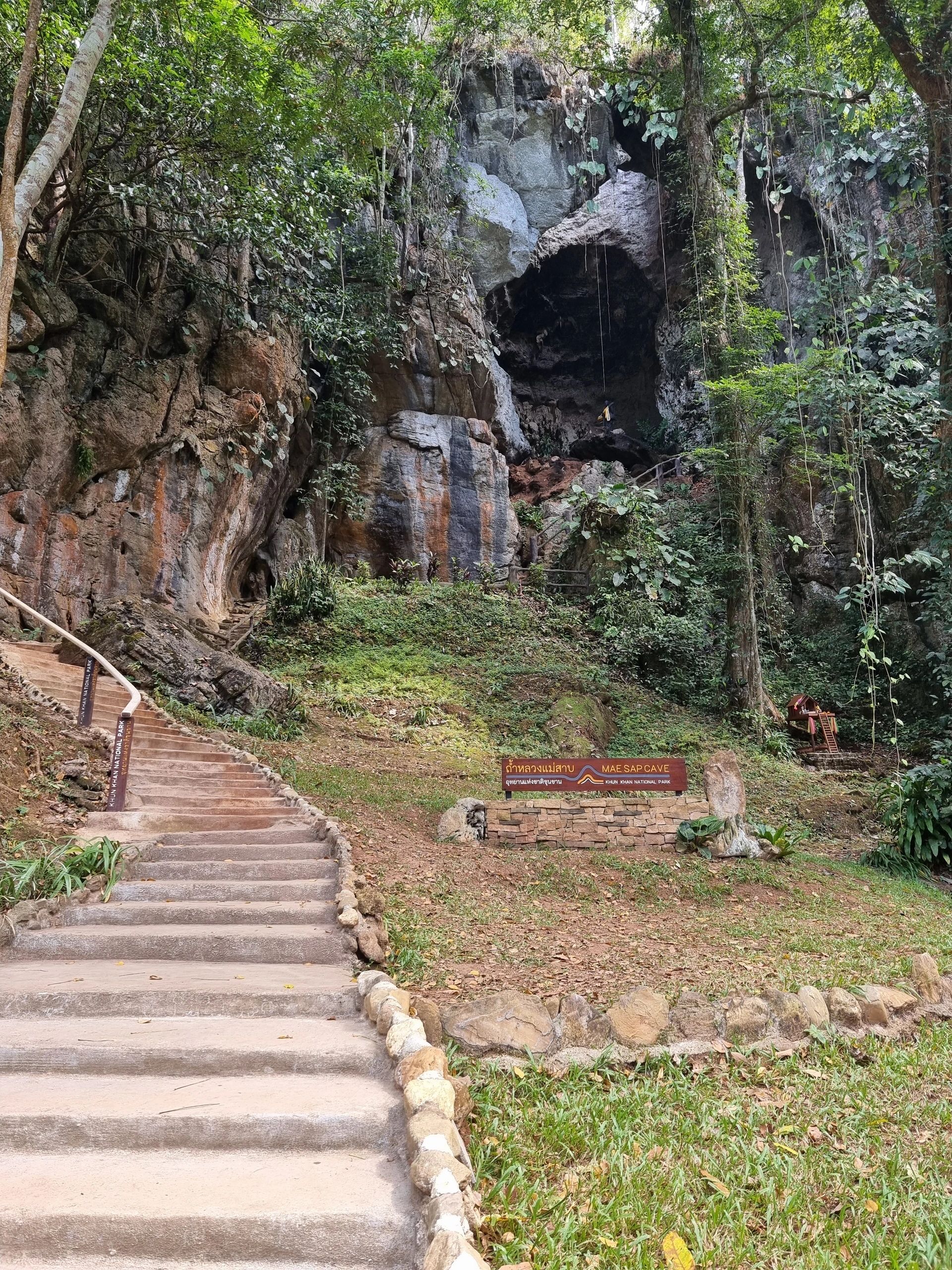
You want highlights, not endurance. In one loop you get jungle-covered hills, the 700-year-old Wat Umong tunnel temple, the underground caves at Mae Sap, the Tat Mok waterfall most tourists never find, and a stop at a local coffee roaster pulled straight from the hills you’re riding through. It’s a sampler platter of what the north does best.
You’re traveling with a partner who isn’t riding. The Samoeng Loop accepts pillion passengers comfortably, and the roads are tame enough that a non-rider stays calm in the back. The Mae Hong Son Loop, with six straight days of switchbacks, is a harder ask of a passenger.
Most riders who try the Samoeng Loop come back the next year for Mae Hong Son. It’s a great first step.
See the Samoeng Loop tour →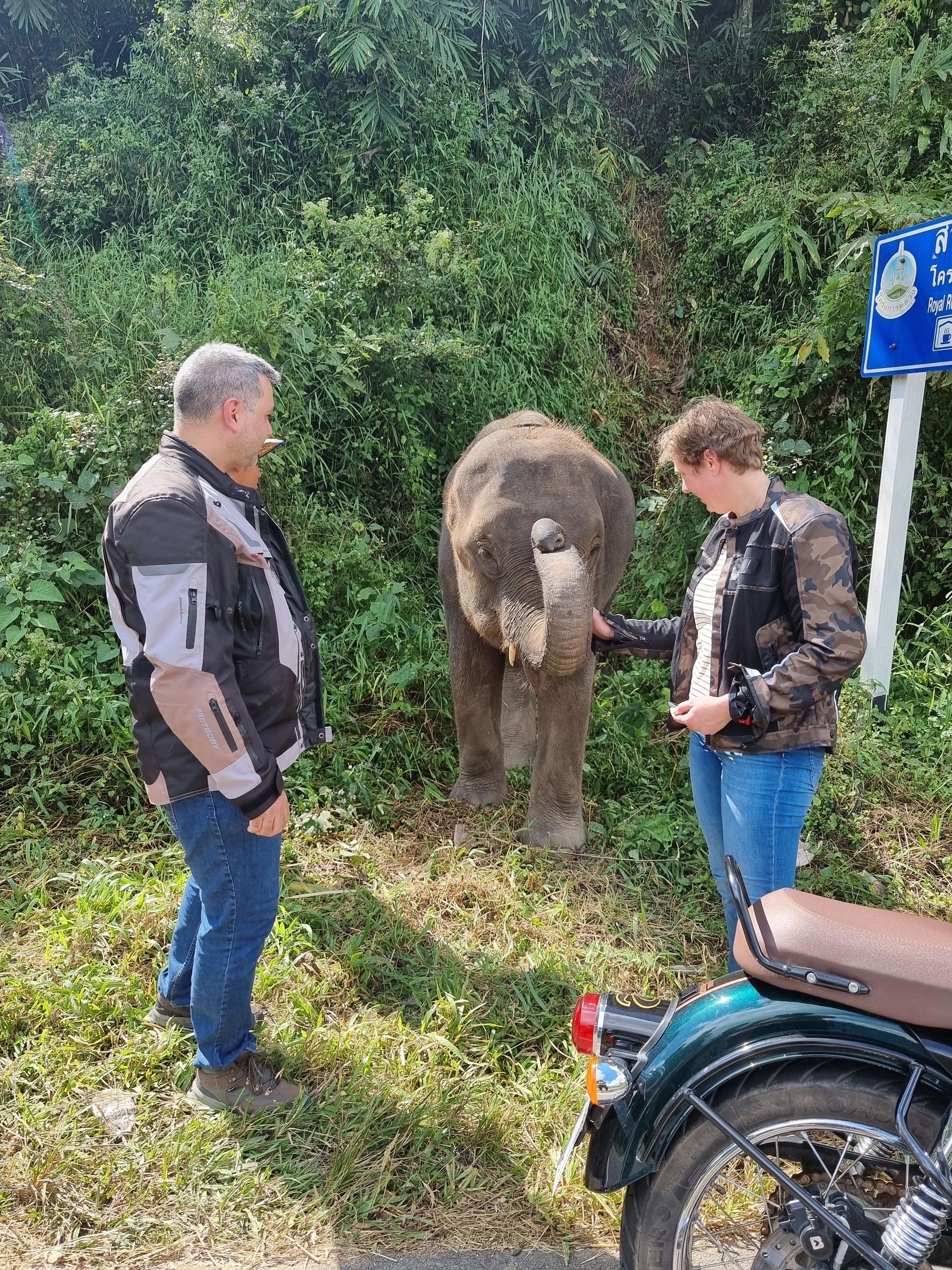
CHOOSE THE MAE HONG SON LOOP IF…
You have four days and a plan. The Mae Hong Son Loop is the ride every motorcyclist in Asia eventually has to do. Four days, three nights. Pai, Soppong, Mae Hong Son, Khun Yuam, the long quiet road back through Mae Sariang. It’s a logistically involved ride, and we’ve built the pacing, accommodation, and food stops around it. If you’d rather plan it yourself, the Mae Hong Son Loop route guide has every leg measured and the fuel gaps that matter.
You’re comfortable on twisty mountain roads. The MHS Loop isn’t technical — it’s paved throughout — but it’s relentlessly twisty. Six hours a day of gentle climbing, descending, and arcing through corners cut into the side of forested mountains. If you’ve ridden hill country in the rain at home and enjoyed it, you’ll love the MHS Loop. If your only experience is parking-lot practice, start with Samoeng first.
You want to sleep in places most travelers never reach. We’ve hand-picked guesthouses and small boutique stays along the loop — from the riverside teak houses in Pai to a hilltop place in Soppong where the morning mist sits at the level of your second-floor window. This isn’t the brochure hotel-tour version; it’s the version we’d book for ourselves.
You want the trip-of-the-trip story. People come back from Mae Hong Son talking about it for years. That’s the reputation. Cool-air valleys at dawn, hot chillies and khao soi at noon, a guesthouse owner who insists on a third whisky at midnight. It earns its reputation honestly.
We run small groups — around five riders — with a guide who knows the road, and the bikes come out of our own workshop with our own mechanics behind them. Mountain curves aren’t the place to discover a soft brake lever.
See the Mae Hong Son Loop tour →
HOW DIFFICULT IS EACH RIDE, REALLY?
The honest answer: the Samoeng Loop is genuinely beginner-safe, and the Mae Hong Son Loop is intermediate — which means if you can already ride a motorbike, you can ride it. We’ve run both with first-time-in-Thailand riders.
For Samoeng, if you can ride a scooter without dropping it and you’re comfortable following a guide on a quiet road, you’ll be fine. Our guides do a 15-minute briefing in front of the shop before we roll out, including a slow walk-through of how to take a right-hand corner properly on a Thai road.
For Mae Hong Son, you should already ride a motorbike with confidence — that’s the whole requirement. The roads are paved, the surface is generally good, and you ride at your own pace behind the guide. Day two is the long one, through Mae Sariang and Mae Hong Son up to Ban Rak Thai; the other three days are short.
If you’re unsure, message us. We’ll ask three questions about your riding history and tell you honestly which loop fits.
WHEN TO RIDE
Both loops are best from November to February — cool, dry, clear mountain air, the rice fields are still green, and the morning fog in the valleys is at its photographic best.
March to early May brings the burning season — smoke from agricultural fires can hang in the valleys, so views are reduced. Riding is still fine, but if you’re here for the scenery, time it earlier.
June to October is the wet season. The Samoeng Loop runs year-round; we just adjust timing around the daily afternoon storms. The MHS Loop is doable in the wet but greener and slower — some riders prefer it for exactly that reason.
A note on Songkran (mid-April): the entire country becomes a water fight. Beautiful chaos, but not the time to ride a multi-day loop. Save Songkran for the Samoeng Loop and a swim, not the MHS Loop and a saturated jacket.
COMMON QUESTIONS
+Can I do Mae Hong Son Loop solo without a guide?
Yes, plenty of riders do. The reason to go with a guided tour is the small things — knowing which guesthouse owner is expecting you, where the shortcut around the rockfall is, which café opens at 6am, and not having to ride pillion-luggage on twisty days. We also handle the daily luggage transfer so you ride empty.
+What if I do Samoeng and want to extend?
A lot of our customers do exactly this — book the Samoeng Loop as a confidence-tester, then upgrade to a 3- or 6-day route the same week. We hold space on later tours when we know there's a possible extension.
+Can a passenger come on Mae Hong Son?
Yes, but be honest with yourself. Four days of leaning into curves on the back of a bike is harder on a passenger than the rider. A passenger should already enjoy long bike rides at home before signing up for MHS.
+Do I need a motorcycle licence?
Yes — bring your motorcycle licence from home. An International Driving Permit is recommended. There is no small-bike exemption: mopeds are treated as motorcycles here. Riding with us you are with a registered Thai tour operator and a Thai-speaking guide, so checkpoints are routine and we handle them. The full answer, including what to do if your home licence has no motorcycle entitlement, is on Before You Ride.
+What if it rains on the day?
We ride if conditions are safe. If a tropical storm closes a mountain pass, we'll reroute or reschedule. Decisions are made the morning of, never far in advance.
Still deciding?
TELL US ABOUT YOUR RIDE.
Three lines about your experience and what you’re hoping for, and we’ll tell you honestly which loop is the better match.
About Nomad Bike Tours. We’re a small Chiang Mai-based outfit running guided motorbike tours through Northern Thailand and Laos. Our guides ride these roads for fun on their days off, and we run small groups — around five riders — with our own workshop behind every bike. If you’ve got a question we haven’t answered, find us on Instagram or email info@nomadbiketours.com.
When are you thinking of coming?
Tap a month. We'll tell you what the road is like then — no form, no sign-up.
Every month in one list
- January · Cool-dry season
- January sits right inside the cool-dry season — dry roads, crisp mountain air and the longest views of the year. It is the month we point riders with two spare weeks at, because the dry mountain roads are at their very best. Roll over the high ridges after about 09:00 and you get the valleys below with the morning mist just lifting off them.
- February · Cool-dry season
- February opens with the best of the cool season still in full swing — cold mornings in the hills, clear ridgelines and every road open. The first half of the month is a favourite with riders who want the big views, and we plan every day of the trip around getting you onto the ridgelines at their best.
- March · Hot season
- March is the start of the hot season — long warm days, dry roads, and a relaxed pace built around early starts in the cool of the morning. It is also the tail of the field-burning months, so some days are hazy and the long valley views aren't a promise. What March does beautifully is a shorter, sharper ride: a day loop out of Chiang Mai through the hills, lunch somewhere shady, and back to town before the afternoon heat. Tell us your dates and we'll shape the route to that week.
- April · Hot season · Songkran 13–15
- April is Thailand at its most alive. Songkran falls on 13–15 April and turns every town into a joyful, friendly water fight — one of the great festival experiences anywhere in Asia. Pair a few days of riding either side of it with the celebrations in Chiang Mai, and you get the roads and the festival in one trip.
- May · The first rains
- The first rains arrive and the whole north turns green almost overnight. Mornings are the riding window, the air is freshly washed, and the roads are about as quiet as they ever get. Genuinely underrated: green hills, fresh air, and the switchbacks nearly to yourself.
- June · Green season
- Green season proper — lush jungle, washed air, and fewer riders out than almost any month of the year. Mornings are made for riding and afternoons for a long lunch while the rain passes. We build the trip with flexible days, so you ride the best of every morning.
- July · Green season
- The landscape at its most dramatic — deep green valleys, mist in the mountains and waterfalls in full flow. The 762 bends on the Pai road are a different ride entirely in the green season, and a guide riding in front of you makes every one of them a pleasure. Bring proper rain gear and enjoy a side of the north most visitors never see.
- August · Green season
- August is the north at its greenest, with rice fields glowing and the hills alive. It is a month for a relaxed trip with spare time built in — ride the mornings, take the long way when the weather is kind, and slow down for coffee in the hills. Tell us your dates and we will shape the trip around the best riding of each day.
- September · Late green season
- The rain eases through September and the rice terraces are as green as they get all year — some of the most beautiful riding scenery of the whole calendar. The roads are quiet and the countryside is at its most photogenic. A flexible trip gets the very best of it.
- October · The golden shoulder
- The rains fade through October, the hills are still green, and the roads are wonderfully empty — late October is one of the best-value weeks of the year to be on a bike here. It is a lovely time for the Pai road.
- November · Cool-dry season · the best month
- The cool-dry season opens around mid-November and this is the single best month of the year to ride Northern Thailand: fresh air, cool mornings, ridgelines you can see the whole way along. The Bua Tong sunflowers on Doi Mae U-Kho come out from about mid-month — up the spur road off Route 1263. And Yi Peng and Loy Krathong fall on 24–26 November 2026, the most magical week in Chiang Mai's year, when the city glows with lanterns and candlelit krathongs.
- December · Cool-dry season · peak
- Full cool-dry season — dry roads, long views, and crisp mountain air before the sun gets to work, so bring a warm layer for the early hours. Pai is at its liveliest in December and Ban Rak Thai is at its prettiest, which is exactly why rooms along the loop are worth booking early. Cross the high ridges after about 09:00 and the valleys open up below you.
STILL DECIDING?
Tell us how many days you have and what you've ridden before, and we'll say which of the two fits. A rider answers, not a bot.
Message us on WhatsApp